Serial Killer Handwriting
The phrase "serial killer handwriting" usually invokes graphology — the idea that a cramped slant or a jagged capital betrays a murderer. Forensic science makes a narrower, more defensible claim: that a handwritten letter is a physical exhibit, and that comparing it against known specimens can establish authorship. In the Albert Fish case it did exactly that. A single hand-printed letter, posted in November 1934, is what ended a six-year hunt for the killer of Grace Budd.

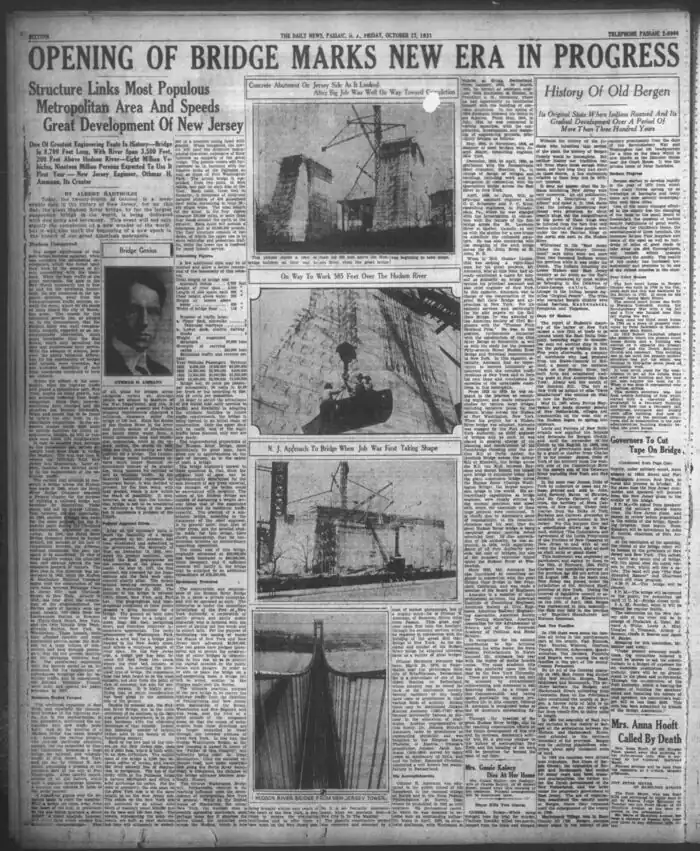
Image: New York Daily News, 1931. Public domain in the United States. Via Wikimedia Commons.
What "handwriting analysis" actually means
Two very different disciplines hide behind the same words, and the distinction matters for anyone reading about a famous case.
Graphology claims to infer personality and even criminal disposition from the shape of writing. It is not accepted as forensic evidence. Studies have repeatedly failed to show that graphologists can predict behaviour or character from a writing sample better than chance, and no court of record treats it as proof of anything.
Forensic document examination (FDE), by contrast, is a recognised forensic specialism. It does not ask "what kind of person wrote this?" It asks "did the same hand write these two documents?" Examiners compare a questioned document against known specimens, weighing letter formation, slant, spacing, alignment, pen pressure, rhythm, and the tell-tale hesitations of someone disguising their hand. They also examine the document as an object — paper, ink, watermarks, printing, and the indented impressions left by writing on a sheet above.
In the modern era the U.S. Secret Service maintains FISH (the Forensic Information System for Handwriting), which digitises threat letters and extracts measurable features — letter height, width, slant, loop formation — so that a new note can be searched against an existing library. The historical cases below predate that system, but the underlying method — systematic comparison, not personality-reading — is the same.
The famous letter-writers
A handful of cases turned serial-killer correspondence into a recurring subject of forensic study. Each illustrates a different lesson about what handwriting can and cannot prove.
Jack the Ripper — the cautionary tale (1888)
The Whitechapel murders generated hundreds of letters to police and press. Three are famous: the "Dear Boss" letter (dated 25 September 1888, the first document to use the name "Jack the Ripper"), the "Saucy Jacky" postcard (postmarked 1 October 1888), and the "From Hell" letter (mid-October 1888), which arrived with half a human kidney. Contemporary handwriting comparison was informal and reached no consensus. Modern document examiners and linguists generally agree there is insufficient reliable evidence to attribute any of them to the killer, and that most were probably hoaxes by journalists or the public. The Ripper letters are taught today as a warning: volume of mail, media contamination, and the absence of good known standards make authorship impossible to settle.
The Zodiac — disguised printing (1968–1974)
The Zodiac killer of Northern California produced one of the most studied bodies of serial-killer writing. The first canonical letters were posted to three Bay Area papers on 31 July 1969, each carrying a third of a cipher. State and federal examiners compared the block-printed letters against handwriting from suspects and reported significant differences; none has ever been matched to the Zodiac under accepted standards. The case is a textbook example of disguised handwriting — deliberate affectation, variable spelling, shifts between careful printing and fluent forms — and of why graphological "personality" readings must be kept separate from validated comparison.
BTK — Dennis Rader (1974–1991; 2004–2005)
Dennis Rader taunted Wichita police with letters and packages for decades. When he resumed contact in 2004 after years of silence, the correspondence again became evidence — but the detail that finally identified him in 2005 was the digital-era successor to handwriting: metadata embedded in a Microsoft Word file on a floppy disk he mailed to police, which named "Dennis" and a local church. The BTK case marks the moment document forensics extended from ink and paper to file properties.
Son of Sam — David Berkowitz (1976–1977)
Berkowitz left a handwritten note at a crime scene and mailed a second letter to columnist Jimmy Breslin. Both were chaotic, irregularly formed, and heavy with idiosyncratic capitalisation — frequently cited examples of how a writer's correspondence becomes part of the case record, though it was a parking ticket, not the handwriting, that led to his arrest.
Albert Fish: the letter that solved the case
Of all these, the Fish case is the one where a handwritten document did not merely accompany the investigation — it was the break in it.
Grace Budd had vanished on 3 June 1928, taken from her family's Manhattan home by a mild-looking elderly man who had called himself "Frank Howard." For six years the case went cold. Then, in November 1934, Grace's mother, Delia Budd, received an anonymous letter. Hand-printed in a careful, deliberate style, it described in appalling detail how the writer had taken Grace to an empty house in Westchester and killed her. (The full text, and our annotated transcription, are on the Grace Budd letter page.)
The letter's content confirmed the family's worst fears. Its envelope is what caught the killer. The stationery carried a small hexagonal emblem with the letters "N.Y.P.C.B.A." — the New York Private Chauffeurs' Benevolent Association. Detective William F. King, who had worked the Budd case from the start, traced the emblem to the association's office. There he learned the printed paper was not available to the public, but that a porter employed there had admitted taking some of the stationery and leaving part of it behind at a rooming house where he had lodged — at 200 East 52nd Street.
King went to the rooming house. The landlady recognised the description, and her records showed a recent tenant who matched. King waited, and when the old man returned, he was arrested. It was 13 December 1934. The mild, white-haired prisoner gave his name as Albert Fish. Within days he had confessed to the Budd killing and far more.
At the March 1935 trial in White Plains, the letter and Fish's other writings sat among the exhibits. The handwriting itself was barely contested — Fish admitted authorship — so the courtroom argument turned not on who wrote the letters but on what the writing revealed about his sanity. The defence built its insanity case in part on the deranged content and the obsessive, repetitive hand. The jury rejected it.
The Fish letters remain among the most reproduced documents in American true crime, precisely because they did the two things handwriting can genuinely do in a case: they preserved a confession in the suspect's own hand, and — through the paper they were written on — they identified him. For the wider archive of his correspondence, see the Letters file and the confession statement.
Graphology versus forensics — the honest caveat
It is tempting, looking at the jagged, crowded hand of the Fish or Berkowitz letters, to read the disturbance back out of the ink. Resist it. Nothing in the Fish letter's slant or spacing identified him as a killer; what identified him was a trade association's monogram on the paper. The handwriting was decisive as evidence of authorship, not as a diagnosis. That is the line the historical record supports, and it is the line this archive keeps.
Frequently asked questions
Can handwriting prove someone is a serial killer?
No. Graphology — inferring character or criminality from handwriting — is not accepted as forensic evidence. Forensic document examination makes a narrower claim: whether the same hand wrote two documents. In the Fish case the handwriting identified the author of a confession, but it was the stationery, not the script, that revealed who he was.
How did handwriting catch Albert Fish?
Strictly, it was the paper. Fish's November 1934 letter was written on stationery bearing the emblem of the New York Private Chauffeurs' Benevolent Association. Detective William F. King traced it to a rooming house at 200 East 52nd Street and arrested Fish there on 13 December 1934.
What is the difference between graphology and forensic document examination?
Graphology claims to read personality from writing and is not court-accepted. Forensic document examination compares a questioned document against known specimens to assess authorship — letter formation, slant, pressure, and the physical document itself.
Further Reading
Independent, non-Wikipedia sources vetted at the time of publication. External links open in a new window.
- The Albert Fish letter — full text (Wikisource) — Public-domain transcription of the November 1934 letter to Mrs. Budd.
- How forensic document examination works — Plain-language overview of questioned-document methodology.
- Albert Fish press coverage — Newspapers.com search — Contemporary newspaper scans, 1928–1936.
See: the Letters archive, the Grace Budd letter, and how Albert Fish was caught. Related reference: serial killer quotes and serial killer books. Return to the main archive.