Serial Killer Quotes
Few subjects are as misquoted as the serial killer. Lines drift across quote sites and film posters with no source attached, and the most chilling are often the least verifiable. This page does the opposite: it separates what was actually said and recorded from what was invented later — beginning with Albert Fish, whose most famous "quote" turns out not to be a quote at all.
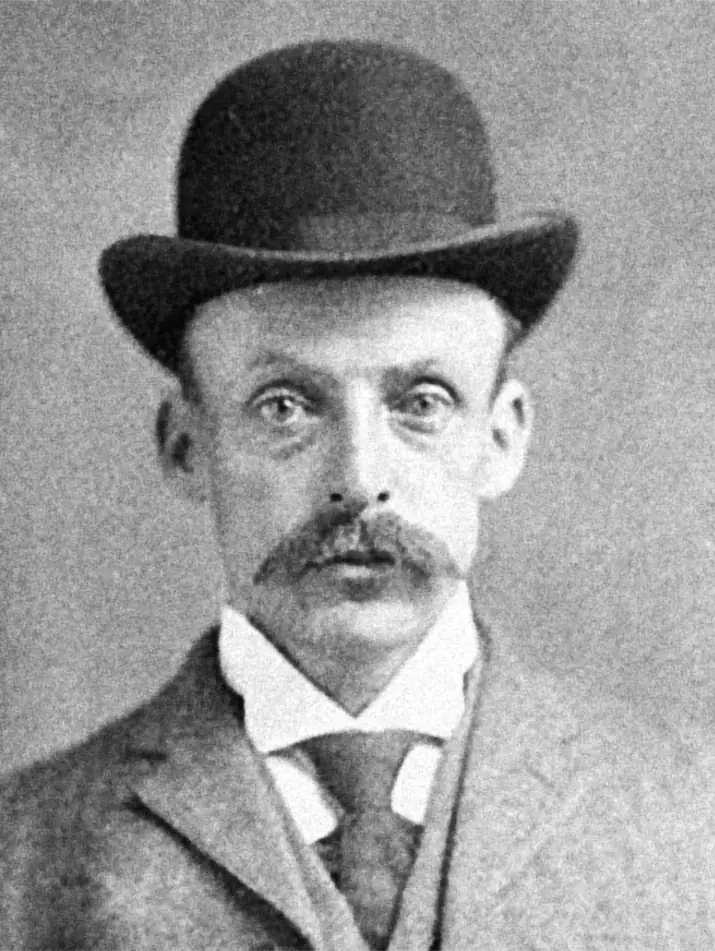
Image: Albert Fish, early 20th century. Public domain in the United States. Via Wikimedia Commons.
Albert Fish in his own words
The only Fish "quotes" that meet a documentary standard are the ones he wrote down himself. Everything attributed to him in conversation should be read with caution.
Documented: the Grace Budd letter (November 1934)
The single most reliable source for Fish's own words is the letter he hand-printed to Grace Budd's mother, Delia, in November 1934. It survives as a public-domain trial exhibit. Its closing lines are among the few Fish statements that can be quoted with confidence, because they exist in his own hand:
"I did not fuck her tho I could of [sic] had I wished. She died a virgin."
The letter's grotesque fiction — an invented famine in China, used to rationalise cannibalism — is reproduced and annotated in full on the Grace Budd letter page. Whatever else is uncertain about Fish, this document is not: it is his confession in his own writing.
Disputed: "the supreme thrill"
The line most often hung on Fish is this:
"What a thrill it will be to die in the electric chair… the supreme thrill, the only one I haven't tried."
It appears in quote databases and documentaries, almost always without a citation. We have not been able to trace it to a trial transcript, a signed statement, or contemporary 1930s press coverage. It is consistent with his documented masochism — Fish told psychiatrist Fredric Wertham he welcomed pain — but the exact wording is unverified. Treat it as apocryphal: a line that captures the legend of Albert Fish rather than a recorded fact. The same caution applies to the widely circulated "I like children, they are tasty," which reads as a later condensation of his cannibal letters, not a sourced statement.
Reliable in substance: what Wertham recorded
The firmest non-written source is Dr. Fredric Wertham, the psychiatrist who examined Fish before trial and testified for the defence. Wertham documented Fish's own account of his compulsions — his self-injury, his decades of offending, the needles he inserted into his own body (confirmed by the pelvic X-ray). These are reported through Wertham rather than quoted verbatim, but they rest on a named, professional, contemporaneous source rather than an un-cited aggregator.
Quotes from other notorious killers
For comparison, here are widely cited lines from later American cases. Unlike most of the Fish material, several of these can be tied to recorded interviews or trial coverage — which is exactly why they are quoted so often.
Ted Bundy
From his recorded death-row interviews: "I'm the most cold-hearted son of a bitch you'll ever meet." Bundy's filmed and taped conversations make him one of the few killers whose words are genuinely well-documented.
Jeffrey Dahmer
From post-arrest interviews: "I viewed them as objects, as strangers… It is hard for me to believe a human being could have done what I've done." Tied to recorded statements and his 1992 trial.
David Berkowitz — "Son of Sam"
From the note left for the NYPD and the letter to columnist Jimmy Breslin in 1977: the writings are preserved as case documents, which is why their wording is reliable even where his later explanations are not.
Edmund Kemper
Kemper's lengthy, articulate prison interviews are among the most-cited in the profiling literature — the basis for much of what the FBI's early Behavioral Science Unit recorded about organised offenders.
Why so many serial killer quotes are fake
The pattern is consistent. A line is dramatised in a film or condensed in a magazine, stripped of its source, and copied across quote sites until repetition lends it false authority. The Fish "supreme thrill" line is a model case: vivid, in-character, endlessly shared, and traceable to nothing. A quote earns trust only when it can be tied to a primary record — a trial transcript, a recorded interview, or, as with the Budd letter, a document in the killer's own hand. That is the standard this archive applies, and it is why we flag the legends as legends.
Frequently asked questions
Did Albert Fish really say the electric chair would be the "supreme thrill"?
The line is widely repeated but cannot be traced to any trial transcript, signed confession, or 1930s newspaper. It should be treated as a reported or apocryphal quote, not a verified statement — even though it fits his documented masochism.
What is the most reliably documented Albert Fish quote?
His own handwriting. The November 1934 letter to Grace Budd's mother survives as a public-domain trial exhibit; its words are the most secure we have. Quotes attributed to him in conversation are far less certain.
Why are so many serial killer quotes misattributed?
Because they circulate through aggregator sites and films without citation. Verified quotes can be tied to a transcript, a recording, or a document in the killer's own hand; most viral "quotes" cannot.
Further Reading
Independent, non-Wikipedia sources vetted at the time of publication. External links open in a new window.
- The Albert Fish letter — full text (Wikisource) — The primary source for Fish's own documented words.
- Albert Fish press coverage — Newspapers.com search — Contemporary trial reporting, 1934–1936.
See: the Grace Budd letter, the last words, and the psychology of the case. Related reference: serial killer handwriting and serial killer books. Return to the main archive.